Search

Leave a Message

Thank you for your message. I will be in touch with you shortly.

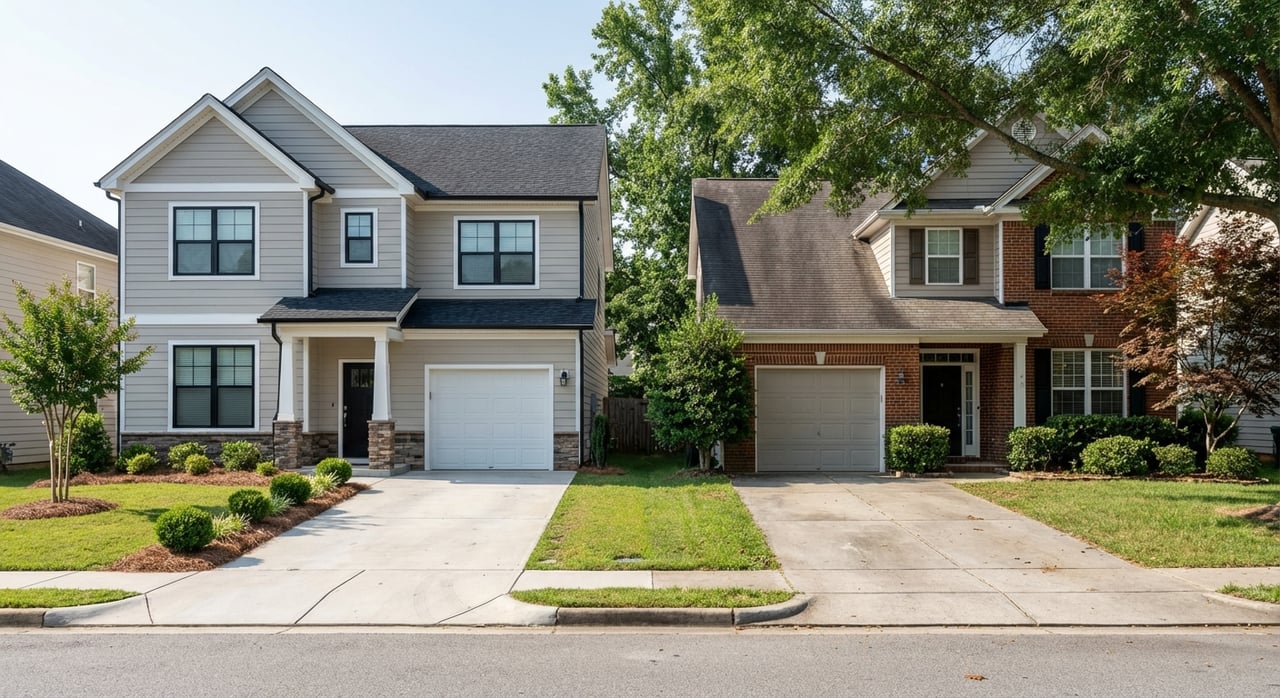
New Vs Resale Homes In Holly Springs

February 19, 2026

New construction’s sparkle is tempting, but a move-in-ready resale can feel smarter for your budget and timeline. If you’re weighing both paths in Holly Springs, you’re not alone. You want clarity on what you’ll actually pay, how long it will take, what’s covered by warranties, and how HOAs can shape day-to-day living. This guide gives you a clear, local comparison so you can make a confident decision. Let’s dive in.

Holly Springs market at a glance

Recent snapshots show the typical single-family price in Holly Springs landing roughly between $570,000 and $635,000, depending on the source and month. Reported median days on market have ranged about 39 to 67 days, with total active listings in the low hundreds. New construction is a meaningful slice of inventory here. These figures change month to month, so plan to confirm the latest numbers with your agent and local MLS before you write an offer.

New vs resale: what you really pay

Sticker price vs effective price on new builds

Builders often advertise a base price for a floor plan. Your real contract price usually reflects three things:

  • Design-center upgrades (cabinets, flooring, appliances, fixtures)
  • Structural options (covered patios, bonus rooms, third garage bay)
  • Lot premiums (cul-de-sac, larger lot, specific orientation)

Builders also use incentives to change your net cost, such as closing-cost credits, rate buydowns, or upgrade allowances. Always request the full purchase agreement and a written price list before you put down a deposit. Ask for a sample worksheet that shows how options, premiums, and incentives affect the bottom line you’ll finance.

First-year cost comparison

New homes often carry a price premium over similar resale homes, but the gap has narrowed in recent years. When you factor in lower early-year repairs, builder warranty coverage, and potential energy savings in many new homes, your first-year ownership costs can be closer than you expect. See this industry discussion on how new-build premiums balance against early maintenance and warranty protections in practice (buyers’ comparison guide).

Ongoing costs to budget in Wake County

Beyond your mortgage, plan for:

  • Property taxes. Wake County’s effective property-tax burden is materially lower than many U.S. counties, but your exact bill depends on assessed value and municipal rates. Run scenarios with the Wake County property tax calculator to set expectations (property tax overview).
  • Homeowner’s insurance and utilities. Expect modern systems in new builds to be efficient, though actual bills vary by square footage and usage.
  • HOA dues, where applicable. In fast-growing North Carolina suburbs, HOAs are common in new communities. National research shows median monthly dues in the low-to-mid hundreds in 2025. Confirm what your fee covers (amenities, common-area maintenance, master insurance) and budget it into your monthly plan.
  • Routine maintenance. For resale homes, a practical rule of thumb is to set aside about 1 percent of the home’s value per year for maintenance and repairs. Some homeowners save more, especially for older systems (ownership cost basics).

Timelines and customization

Typical closing timelines

  • Resale: Most resale purchases close in about 30 to 60 days once under contract, depending on financing and contingencies.
  • New construction (quick move-in): Finished or near-finished spec homes often close in 30 to 90 days.
  • New construction (to-be-built): Production builds commonly take about 6 to 12 months. Regional averages show many builds complete in the 6 to 10 month range, though weather, materials, and permitting can shift timelines (how long a house takes to build).

Always get the builder’s schedule in writing, including what counts as “substantial completion,” who handles delays, and your options if delivery slips.

Paths to buying new

You usually have three choices with production builders:

  1. Finished spec: Fastest timeline; upgrades are already set and included in price.
  2. Quick move-in: Near-finished; fewer choices left but still a faster path.
  3. To-be-built: Longest timeline; you choose finishes and some structural options.

Design-center pricing adds convenience but often carries a markup over sourcing similar items later. Ask for a written price sheet with good-better-best scenarios so you can weigh value against move-in day convenience.

Builder contracts differ from MLS forms

Builder agreements often limit traditional inspection windows, require staged deposits, include arbitration clauses, and define completion differently than standard resale contracts. Have your buyer’s agent and, if needed, a real-estate attorney review the full agreement, warranty packet, and incentive terms before you sign. If incentives are tied to a preferred lender, compare written Loan Estimates so you can weigh the credit against the interest rate and fees. Federal rules prohibit forced use of a specific lender, but incentives are often conditional on it (CFPB context).

Warranties, inspections, and maintenance

New-home warranty basics

Many builders follow a layered 1-2-10 model: one year for workmanship, two years for major systems distribution, and a 10-year insurer-backed structural warranty. Ask who administers the structural coverage, and read the claim process so you know how to report issues on time (standard builder warranty overview).

Inspections worth scheduling on new builds

Even brand-new homes benefit from independent inspections. Put these checkpoints on your calendar:

  • Pre-drywall inspection to review framing, electrical rough-in, plumbing, and HVAC layout.
  • Final walk-through to build a punch list before closing.
  • Eleven-month review to capture workmanship items before your first-year coverage ends.

Ask the builder how punch-list items are handled, who completes them, and in what time frame.

Planning for resale maintenance

Resale homes do not come with a builder warranty. You can purchase a home-warranty policy at closing, but aging systems like roofs, HVAC, and water heaters may drive near-term costs. Use a general inspection plus any needed specialty checks to prioritize repairs or negotiate credits. As a planning guide, set aside about 1 percent of the home’s value per year for routine upkeep, keeping in mind that older homes often require more in the first few years (homeownership cost guide).

HOAs and due diligence in North Carolina

Understand the rules that govern your community

Planned communities in North Carolina are largely governed by Chapter 47F, the North Carolina Planned Community Act. Before you buy, request and read the declaration (CC&Rs), bylaws, budget, reserve study, meeting minutes, and any pending litigation. The NC Department of Justice advises buyers to study these documents carefully because HOAs can levy special assessments and enforce rules affecting how you use and maintain your property (NC HOA information portal; NC DOJ consumer guidance).

HOA prevalence and fees

In fast-growing Holly Springs-area suburbs, many new communities include HOAs that maintain common areas and amenities. Median dues have been rising nationally. Always confirm the current fee schedule, what it covers, whether the HOA is still developer-controlled, when control transfers to homeowners, and any history of special assessments.

When a new build is better

Choose a new home if you want:

  • Lower near-term maintenance with layered warranty coverage.
  • The ability to select finishes and, in some cases, limited structural options.
  • Predictable systems and energy-efficient features typically found in newer construction.
  • A flexible move-in date if you can accommodate a longer build timeline.

When a resale is better

Choose a resale home if you prefer:

  • A faster closing timeline and the ability to move quickly for work or school calendars.
  • A mature neighborhood setting, established landscaping, and no construction nearby.
  • More room to negotiate on price, repairs, or seller credits.
  • Known property taxes and HOA dues based on an existing assessment and budget.

Quick buyer checklist for Holly Springs

Use this short list to stay organized:

  • Market check. Review recent comparable sales in the same micro-neighborhood and confirm current local median pricing for the last 60 to 90 days.
  • New construction contracts. Get the full builder agreement, warranty packet, and design-center price list before depositing. Ask which milestones trigger deposits and what remedies apply if delivery slips.
  • Inspections. For new builds, schedule pre-drywall, final walk-through, and 11-month inspections. For resales, order a general inspection plus any needed specialty checks.
  • Incentives and lending. If incentives require a preferred lender, compare Loan Estimates with outside lenders so you know the true net benefit (CFPB guidance).
  • HOA diligence. Request governing documents, budgets, reserve studies, meeting minutes, and any pending litigation. Review amendment rules and special-assessment history (NC HOA resources).
  • Permits and closing items. For new builds, confirm required permits were pulled and that a Certificate of Occupancy will be issued before closing. For resales, ask for the town’s permit history for major renovations. Contact Town of Holly Springs Development Services for current review and inspection timing.

The bottom line

There is no one-size-fits-all answer. A new home can reduce early maintenance and deliver the finishes you want, while a resale can speed up your move and open doors for negotiation. In Holly Springs, both options are available across a range of neighborhoods and price points. The best choice is the one that fits your budget, timeline, and appetite for customization.

If you want a clear side-by-side based on real comps, construction timelines, and HOA documents in your target communities, let’s talk. You deserve disciplined guidance and a smooth path to the right home. Connect with Dylan Hale to get a tailored game plan.

FAQs

What is the price gap between new and resale homes in Holly Springs?

  • New homes often carry a premium that has narrowed in recent years; the exact gap varies by neighborhood and upgrades, so use same-plan, same-lot-size comps to price your choice.

How long does it take to build a new home in Holly Springs?

  • Many production builds finish in about 6 to 12 months, with regional averages commonly in the 6 to 10 month range depending on weather, labor, materials, and permitting (build-time overview).

What do standard builder warranties cover on new construction?

  • A common 1-2-10 model covers one year for workmanship, two years for major systems distribution, and 10 years for structural issues; ask for the full written warranty and claim process (warranty basics).

What HOA documents should I review before buying in North Carolina?

  • Read the CC&Rs, bylaws, budget, reserve study, meeting minutes, litigation disclosures, and transfer fees to understand rules, costs, and risks (NC DOJ HOA guidance).

How do builder incentives and preferred lenders affect my bottom line?

  • Incentives can lower upfront costs but may be tied to a preferred lender; compare written Loan Estimates so you can weigh credits against rate and fees (CFPB context).

How much should I budget for annual maintenance on a resale home?

  • A practical rule of thumb is about 1 percent of the home’s value per year, with older homes often needing more in the first few years (homeownership costs guide)).

Let’s Build Your Next Chapter

Whether it’s your first home or your next big move, Dylan Hale brings the drive, heart, and strategy to make it happen.